
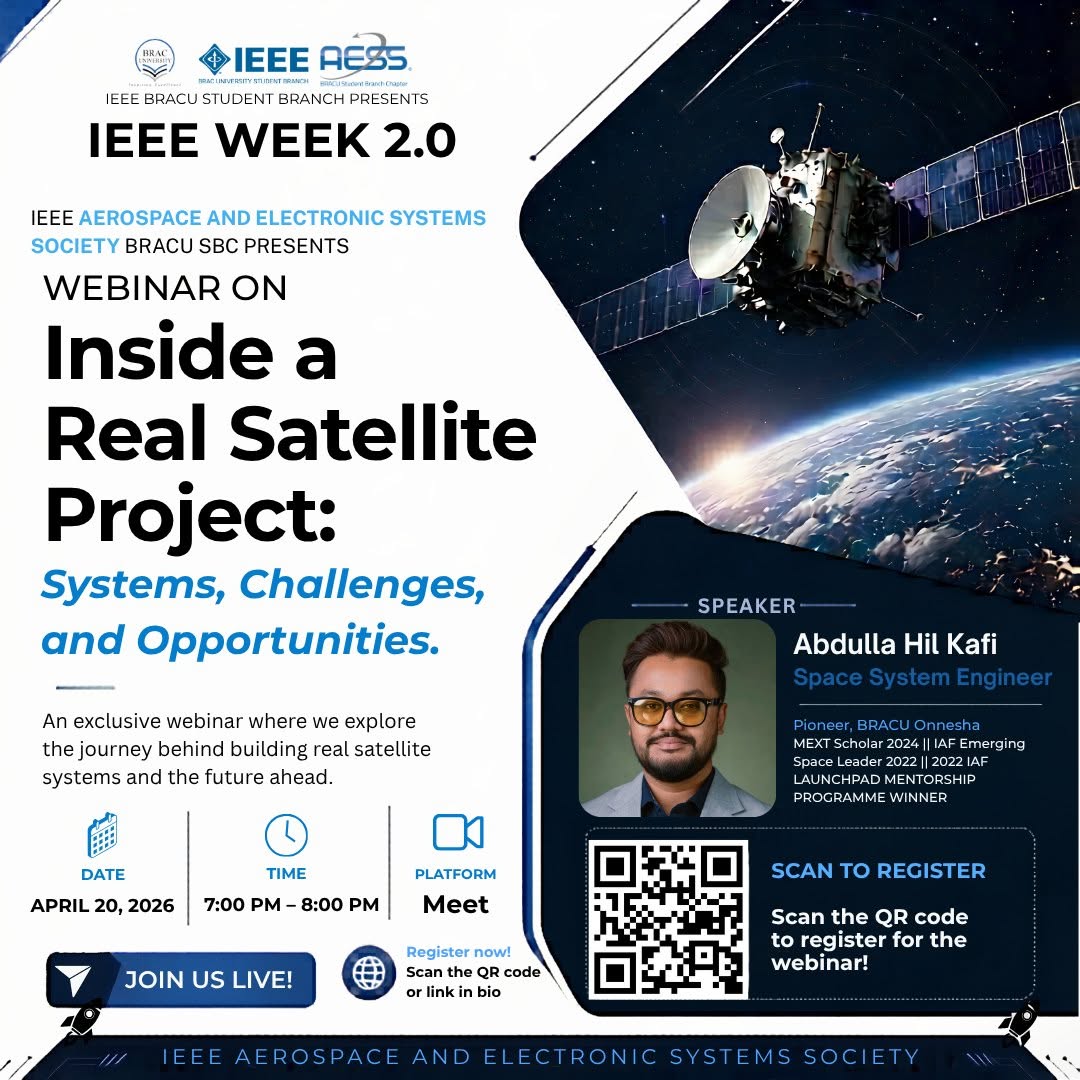
As part of IEEE Week 2026, the IEEE Aerospace and Electronic Systems Society (AESS) BRAC
University Student Branch Chapter organized a webinar titled “Inside a Real Satellite Project:
Systems, Challenges, and Opportunities” on April 20, 2026, from 7:00 PM to 8:00 PM. The
event was designed to provide students with a deeper understanding of how satellite systems are
developed and managed in real-world scenarios, going beyond the theoretical knowledge
typically covered in academic courses.
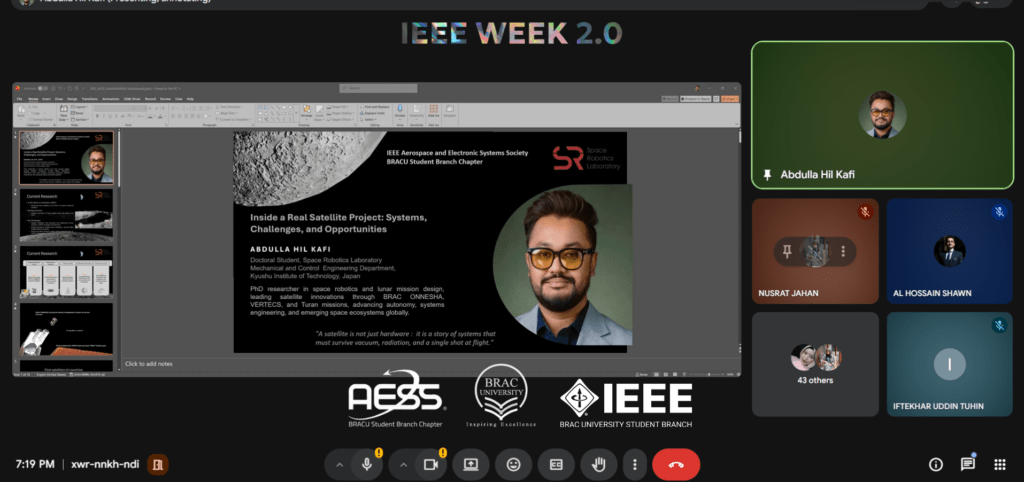
The webinar featured Abdulla Hil Kafi, Space System Engineer and Pioneer of BRACU
Onnesha, as the keynote speaker. With his direct involvement in satellite development and
student-driven space initiatives, he brought valuable practical insights that helped bridge the gap
between academic learning and real engineering applications.
The session began with a brief opening segment conducted by a representative of IEEE AESS
BRACU SB. The host welcomed the participants, introduced the objectives of the webinar, and
emphasized the importance of understanding system-level engineering in the context of
aerospace and electronic systems. This introduction set the tone for the session and prepared the
audience for a practical and experience-based discussion.
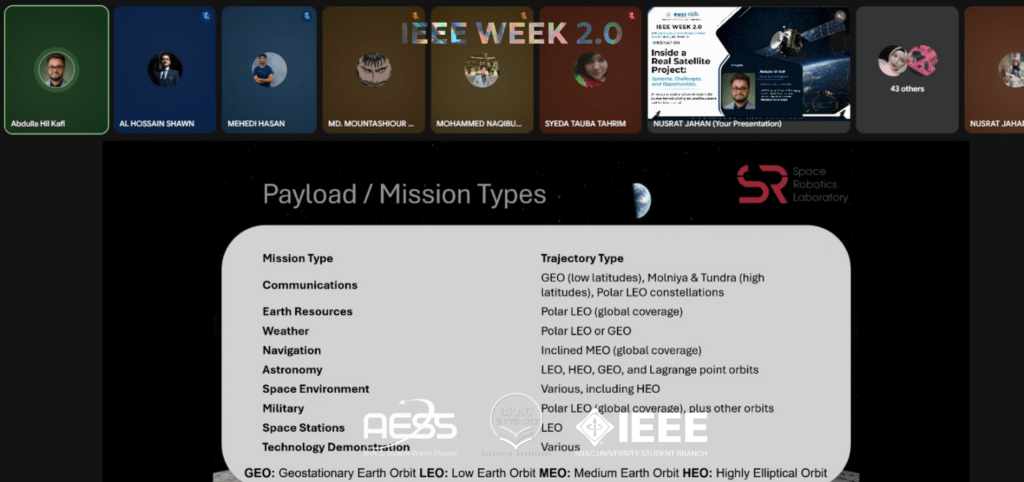
The main session started with an overview of satellite systems, where the speaker explained the
fundamental architecture of a satellite in a clear and structured manner. He introduced the key
subsystems, such as power systems, communication modules, payload integration, and attitude
determination and control and described how each component plays a critical role in ensuring the
successful operation of a satellite. By breaking down complex systems into understandable
segments, the session made it easier for participants to visualize how these elements function
together as a cohesive system.
Building on this foundation, the discussion moved toward the lifecycle of a satellite project. The
speaker described how a project typically begins with an idea or mission objective and gradually
evolves through stages of design, planning, testing, and deployment. He highlighted the
importance of system integration and coordination among different engineering teams,
demonstrating how even small design decisions can have significant impacts on overall system
performance.
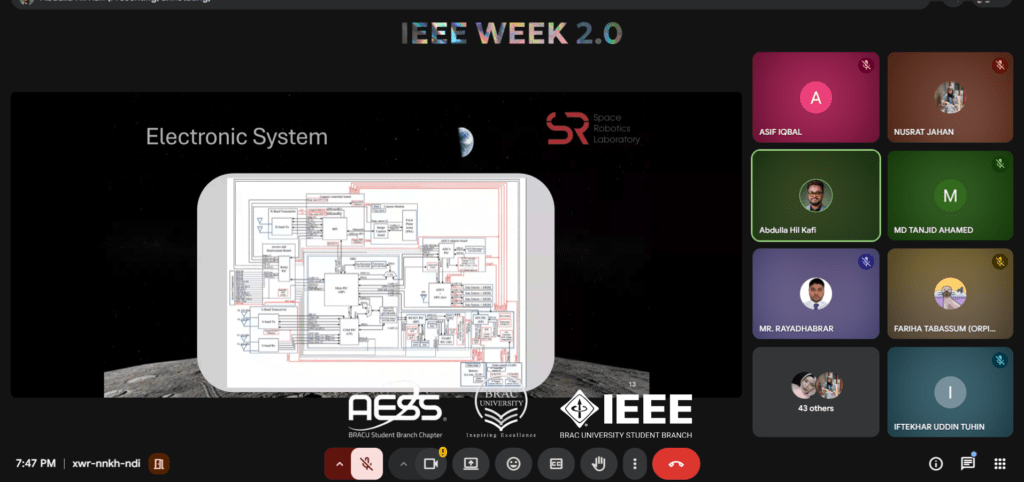
A major focus of the webinar was on the challenges involved in real satellite projects. The
speaker shared practical experiences related to technical limitations, resource constraints, and the
complexity of managing multiple subsystems simultaneously. He discussed how engineers must
constantly adapt to changing conditions, solve unexpected problems, and make critical decisions
under constraints. These insights provided participants with a realistic understanding of the
engineering process, moving beyond simplified textbook examples.
In addition to technical discussions, the session also addressed the skills and mindset required to
pursue a career in satellite engineering and related fields. The speaker emphasized the
importance of developing strong fundamentals in electronics and systems, along with practical
skills such as problem-solving, teamwork, and hands-on project experience. He encouraged
students to actively seek opportunities to engage in projects, research, and collaborative work,
highlighting that early exposure plays a significant role in building confidence and competence.
Another important aspect of the session was its interactive nature. Throughout the webinar, the
speaker maintained a conversational approach, allowing participants to stay engaged and connect
the discussion with their own academic experiences. This approach made the session more
relatable and encouraged active participation.
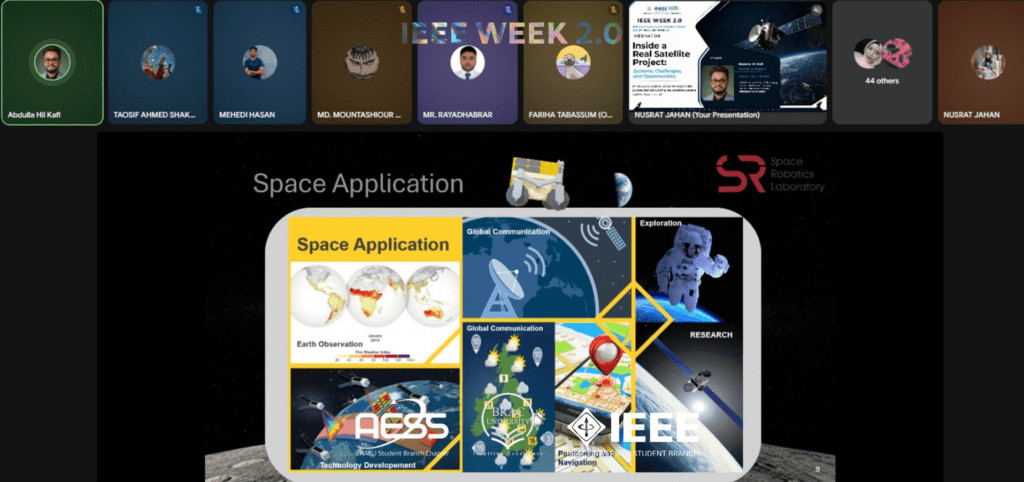
The webinar concluded with an interactive question-and-answer segment, where participants had
the opportunity to directly engage with the speaker. Students asked a wide range of questions,
covering topics such as subsystem design, challenges in satellite missions, career pathways, and
how to prepare for opportunities in the aerospace industry. The speaker provided detailed and
thoughtful responses, further enriching the learning experience.
The event witnessed strong participation from undergraduate students and IEEE members, with
nearly 50 attendees, reflecting a growing interest in aerospace engineering and system-level
thinking among students. The overall response from participants was highly positive, as the
session provided both clarity and inspiration regarding real-world engineering practices.
The webinar successfully achieved its objective of making satellite engineering more accessible
and understandable. By connecting theoretical knowledge with real project experience, it helped
participants gain a clearer perspective on how complex engineering systems are designed,
developed, and operated.
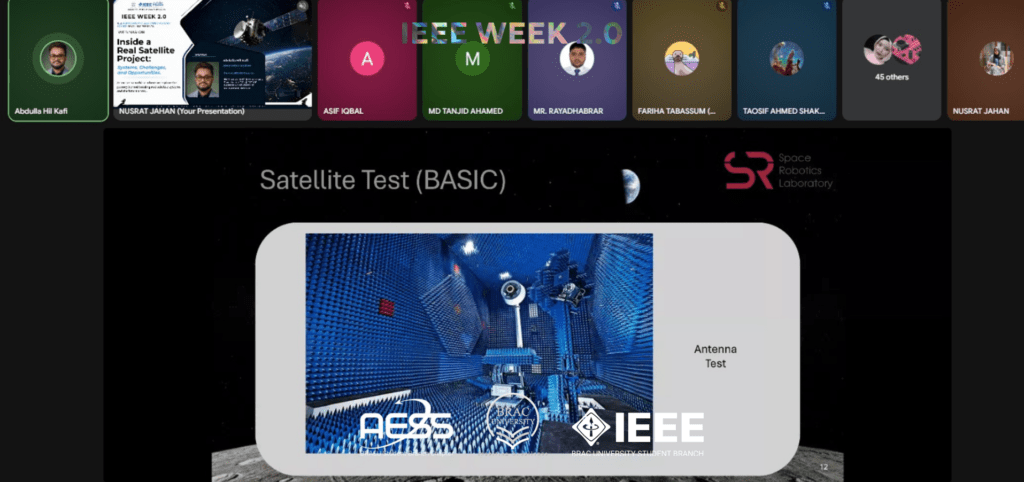
IEEE AESS BRACU Student Branch Chapter extends its sincere gratitude to Abdulla Hil Kafi
for sharing his valuable time, knowledge, and experience. The chapter also thanks all participants
for their enthusiastic involvement and engagement throughout the session.
The event concluded on a positive note, leaving participants with a better understanding of
satellite systems and a stronger motivation to explore opportunities in aerospace and electronic systems engineering. IEEE AESS BRACU SB looks forward to organizing more such insightful
and impactful sessions in the future.